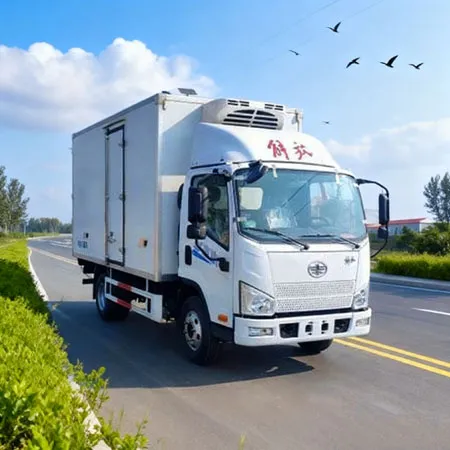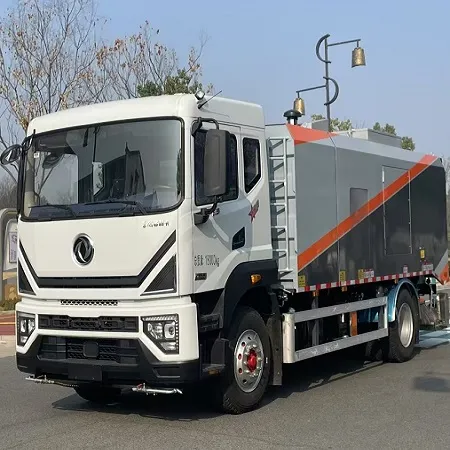
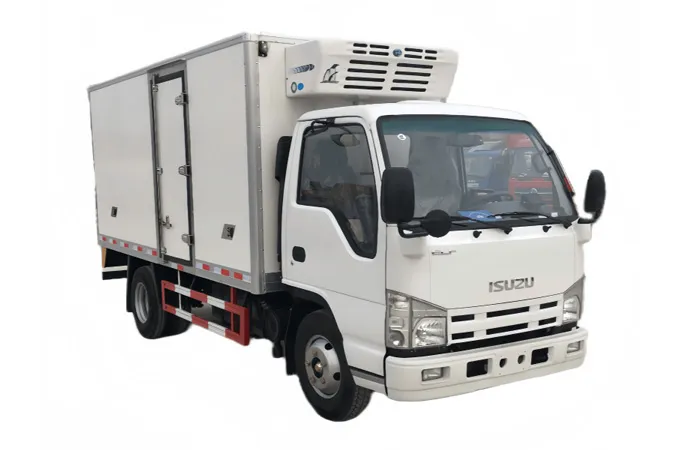
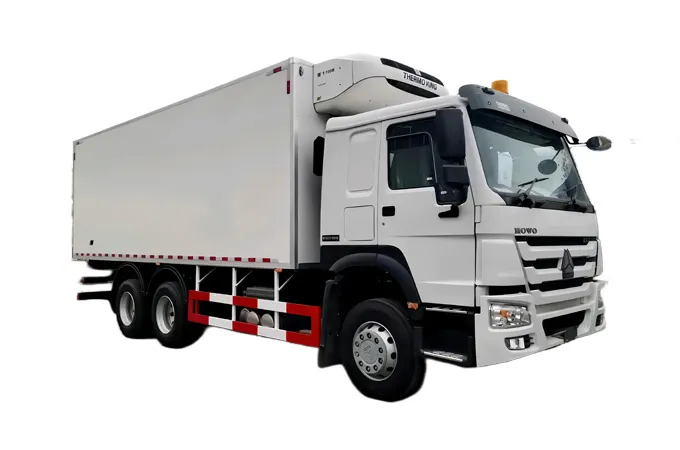
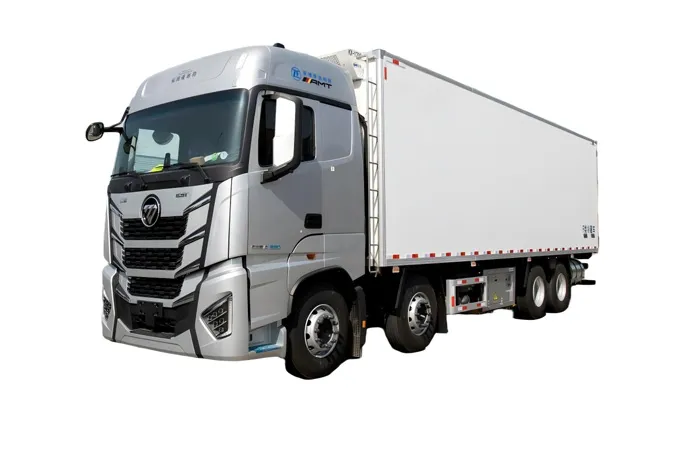
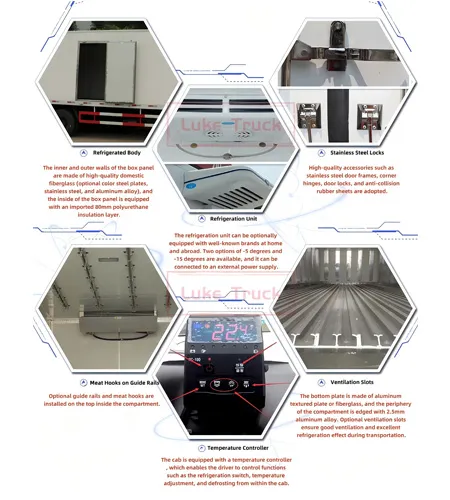
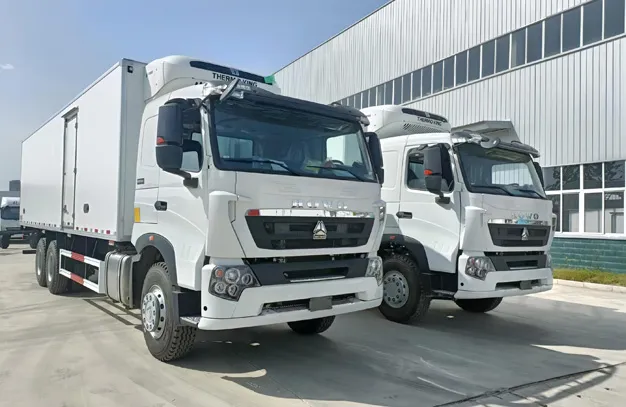

A refrigerator truck works via three core parts: cooling system, insulated compartment, and control unit. The independent cooling unit (powered by engine or diesel) compresses refrigerant to absorb heat from the compartment. The insulated body (with polyurethane foam) traps cold air, preventing external heat entry. Anti-slip floors and airtight doors maintain temperature stability. Drivers monitor temps via digital displays; some models add remote tracking. It preserves perishables by sustaining -25°C to +15°C, critical for cold-chain logistics like food/medicine transport.
1. Perishable Goods:
Primarily used to transport foods, such as dairy products, fresh vegetables, fruits, and frozen goods, without loss of freshness or quality.
2. Pharmaceuticals:
Also used to transport temperature-sensitive pharmaceuticals and other chemicals that require specific temperature conditions for effectiveness.
3. Extended Shelf Life:
The continuous temperature control helps extend the shelf life of perishable products during transportation.