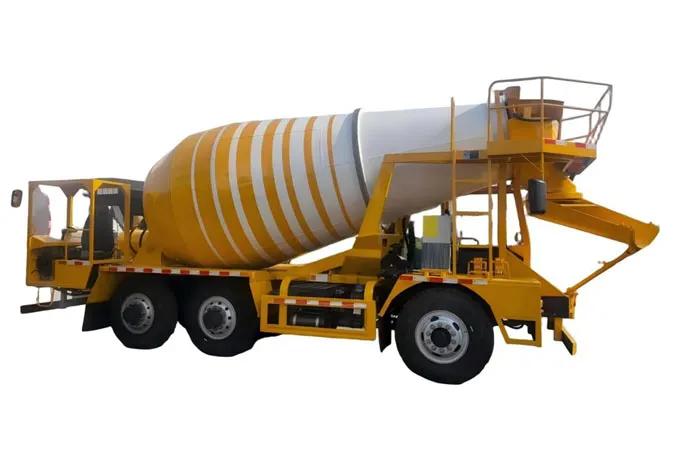
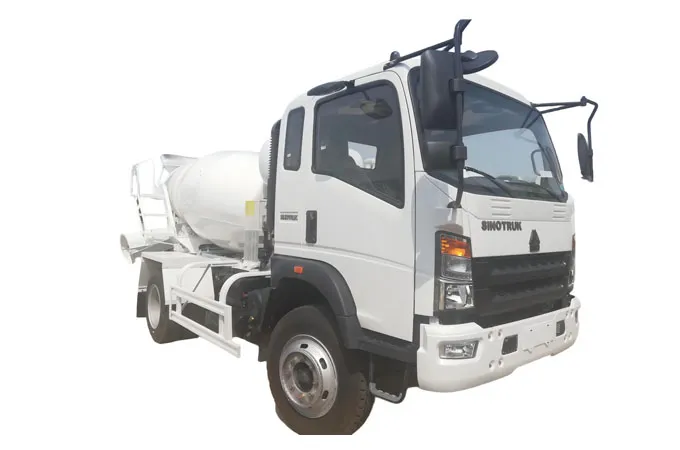
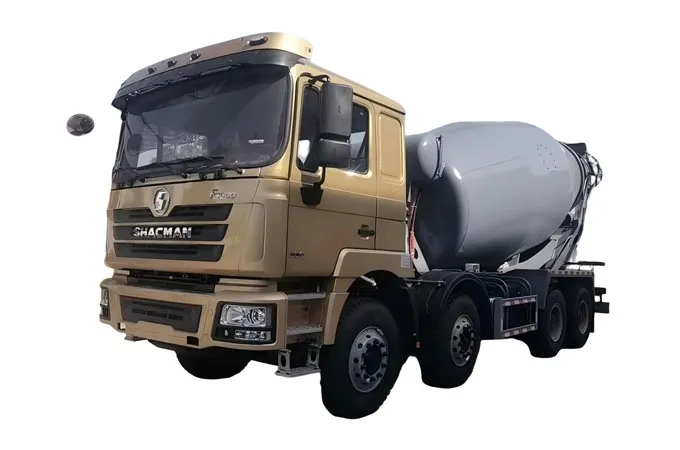
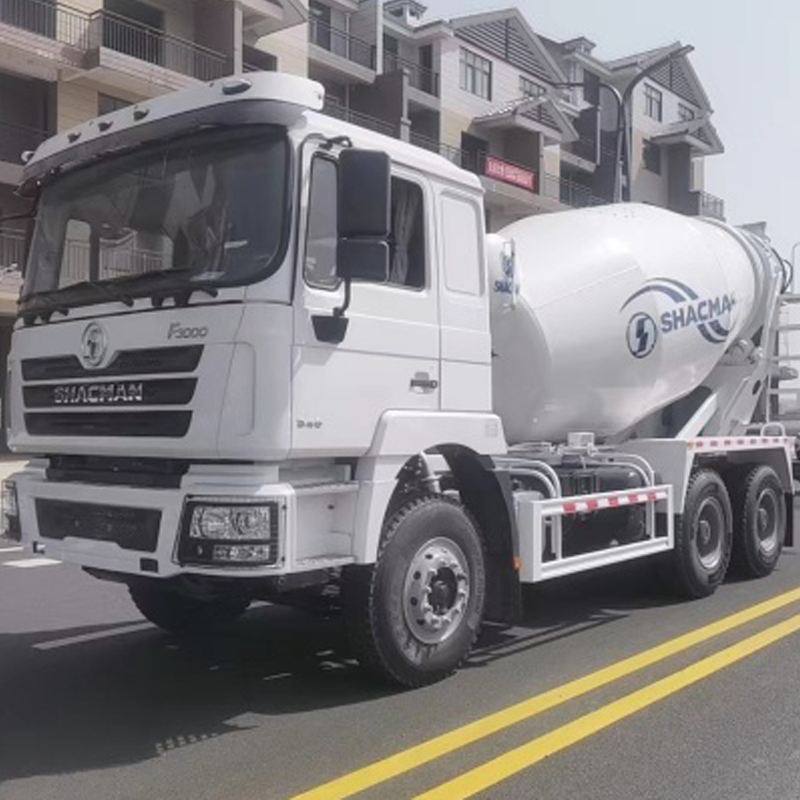
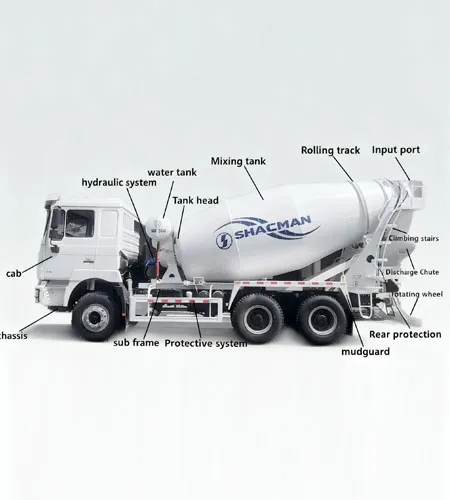

Axle Configuration:
Concrete mixer trucks typically come with two or more axles — most commonly four, five, or six.
Axle Function:
The number of axles depends on load capacity requirements and local road regulations for heavy vehicles.
Load Distribution:
Multiple axles help distribute weight evenly, reducing road wear and extending the lifespan of both the truck and road surfaces.
Drum Capacity:
Specialized mixer trucks often have drum capacities ranging from 8m³ to 12m³, ideal for medium to large-scale concrete transport.
Hardox Technology:
Some mixers use Hardox steel, offering low weight, superior wear resistance, and higher load capacity, improving overall efficiency and durability.
Core Component – Mixing Drum:
The heart of the truck is its rotating drum, which mixes and transports concrete.
Loading Stage:
Raw materials such as cement, sand, gravel, and water are loaded into the drum.
Mixing During Transport:
The drum rotates slowly (about 1–3 rpm) using a hydraulic system driven by the truck’s engine.
Agitation Blades:
Spiral blades inside the drum continuously turn the mix, preventing hardening and ensuring uniform consistency.
Discharging Concrete:
At the construction site, the drum reverses rotation, guiding the mixed concrete out through a discharge chute.
Efficiency:
This dual-direction design allows on-site delivery of fresh, evenly mixed concrete efficiently and reliably.