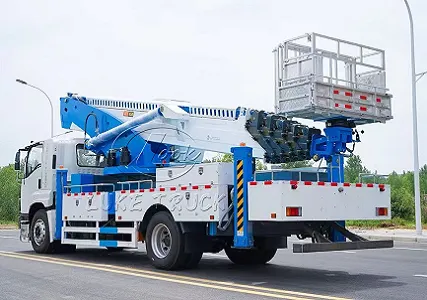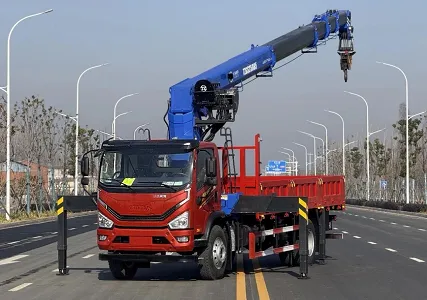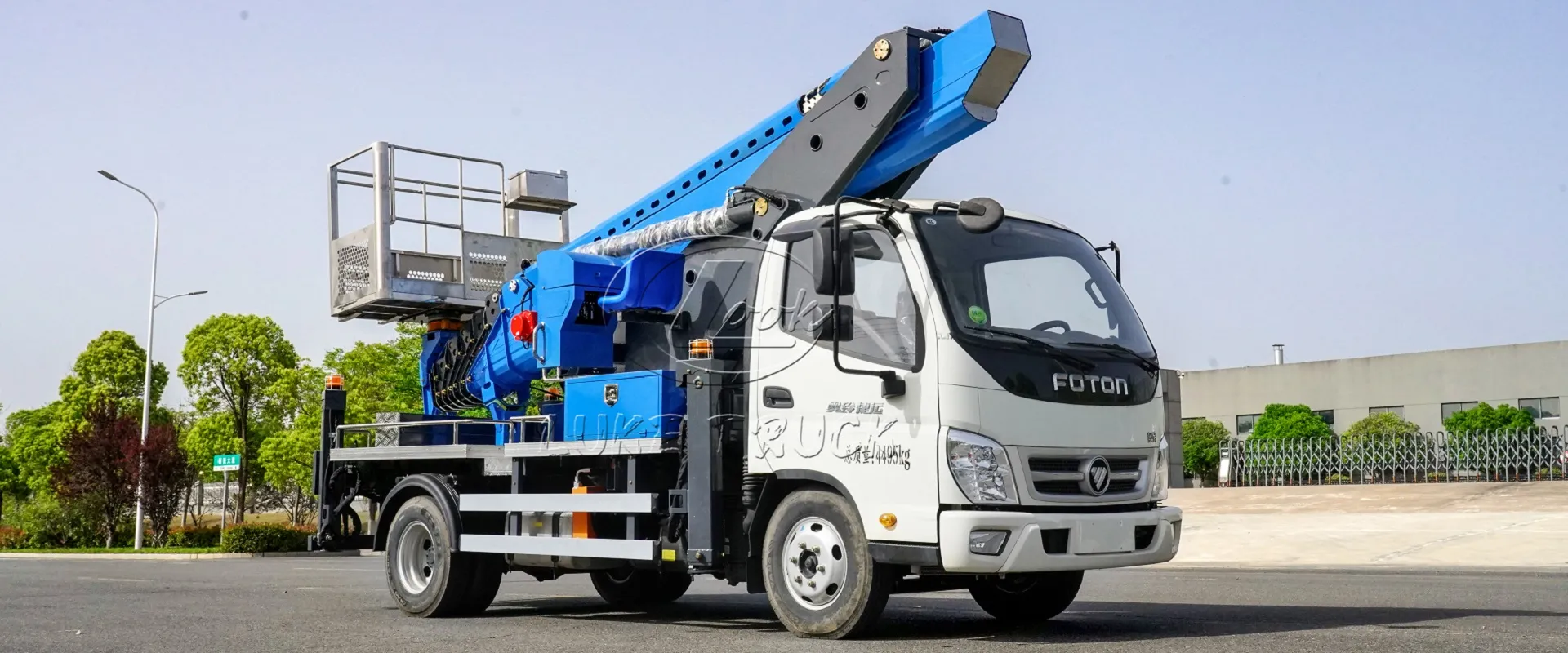
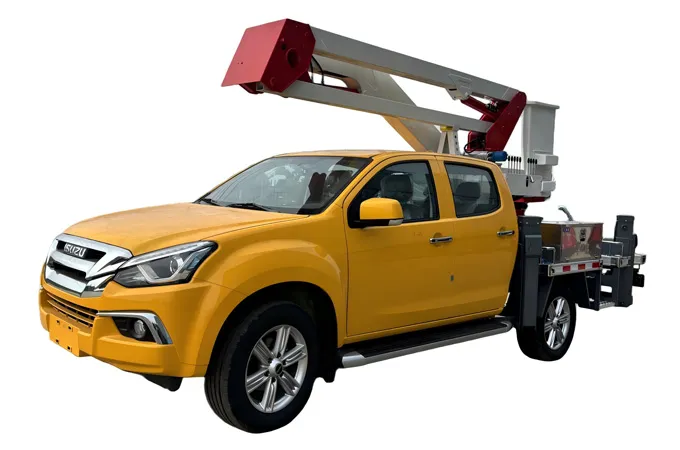
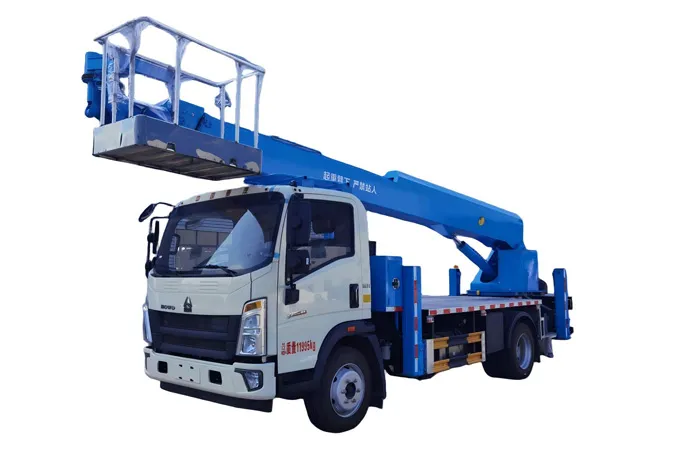
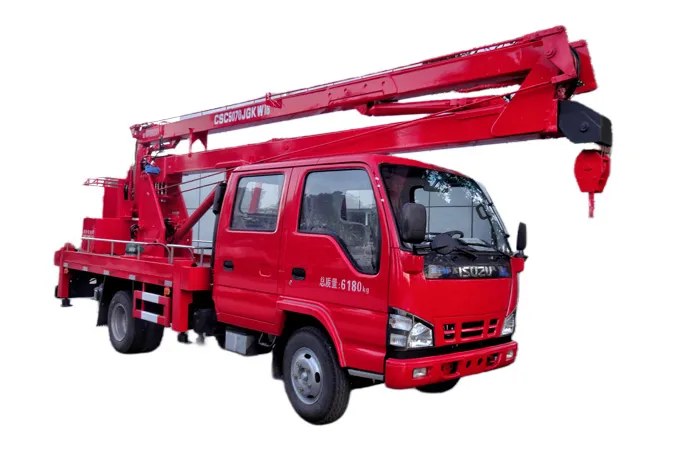
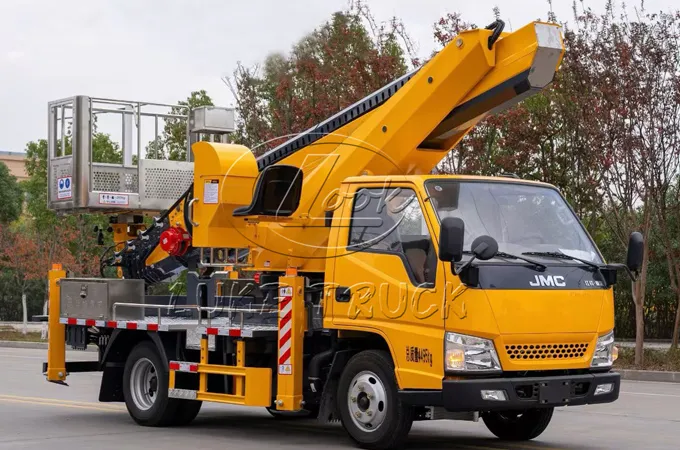
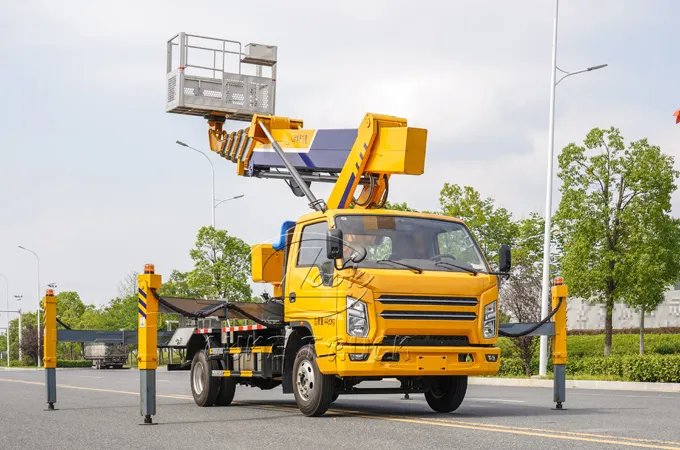
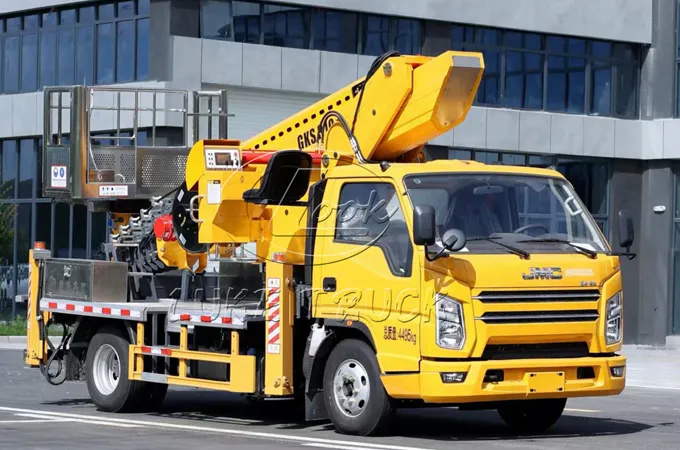
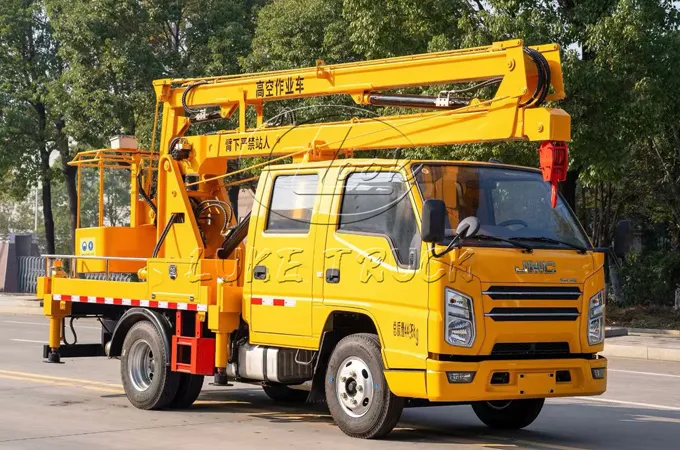
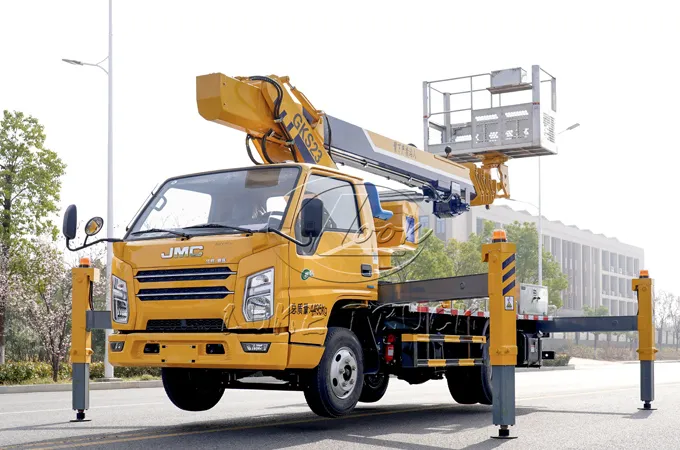
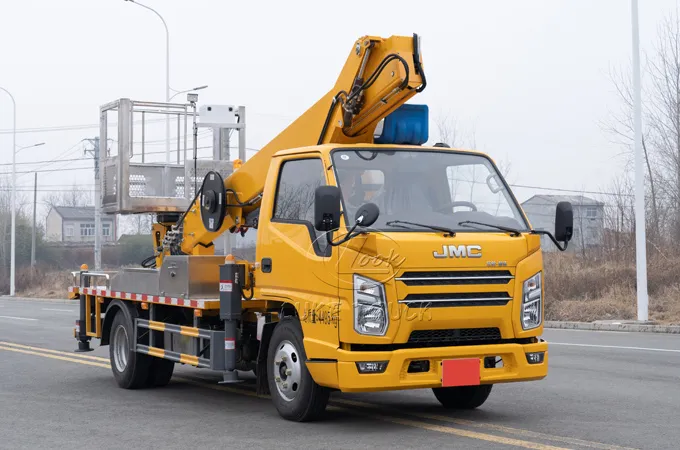
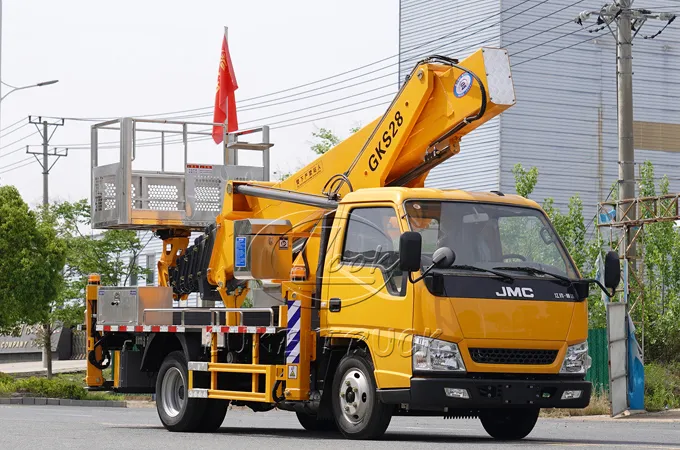
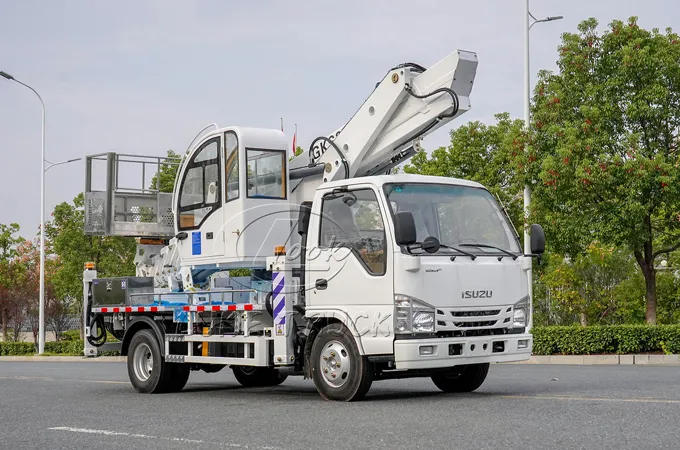
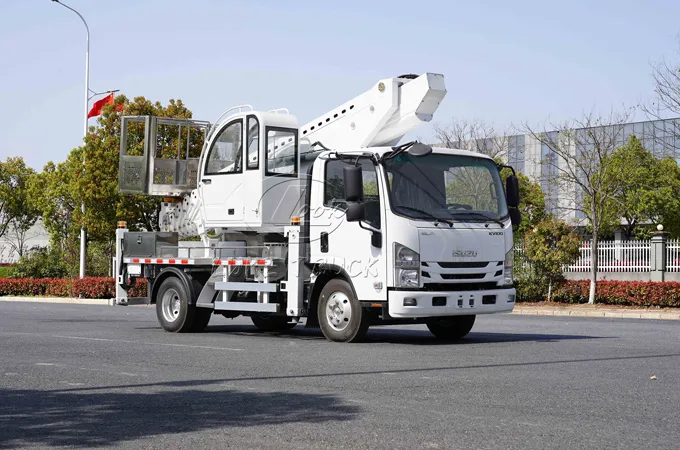
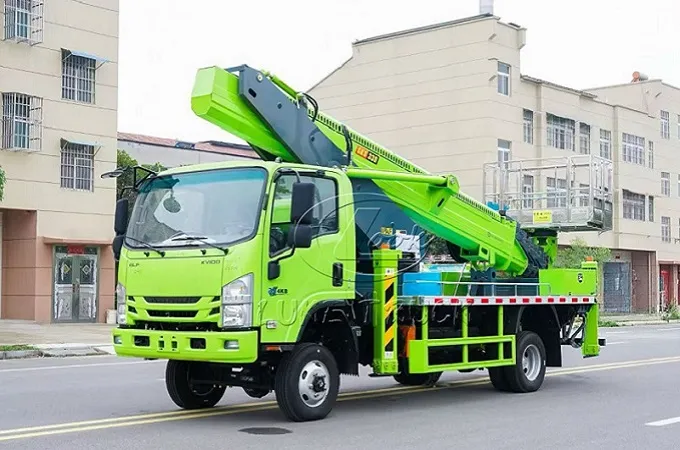
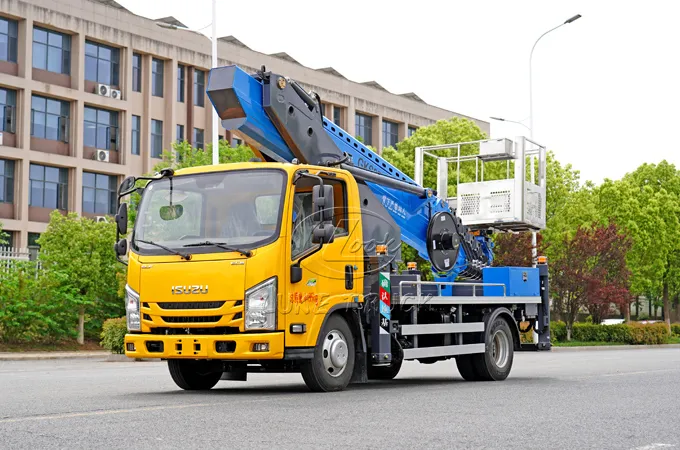
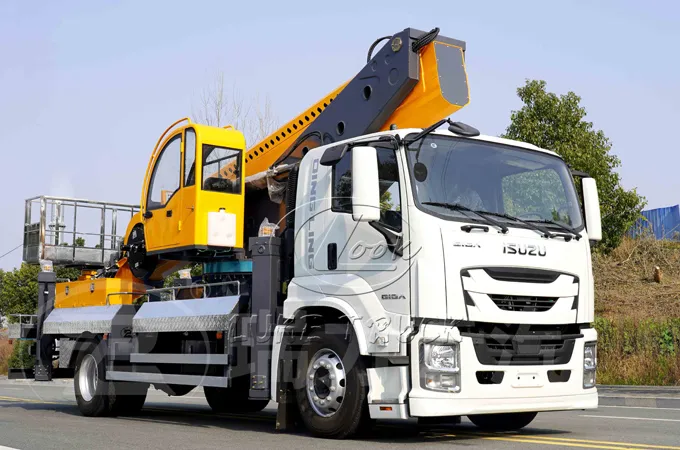
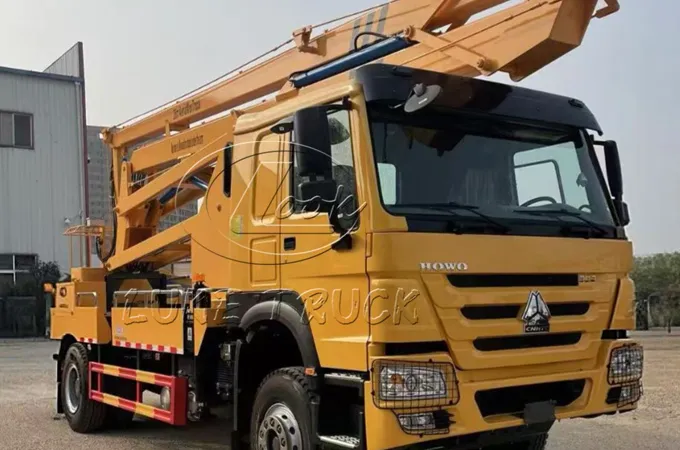
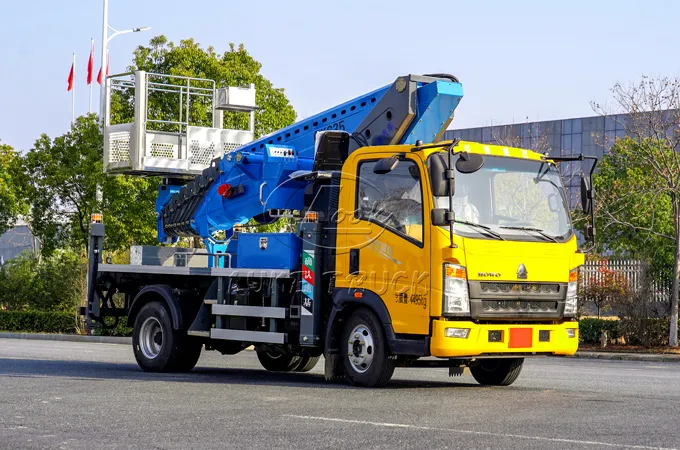
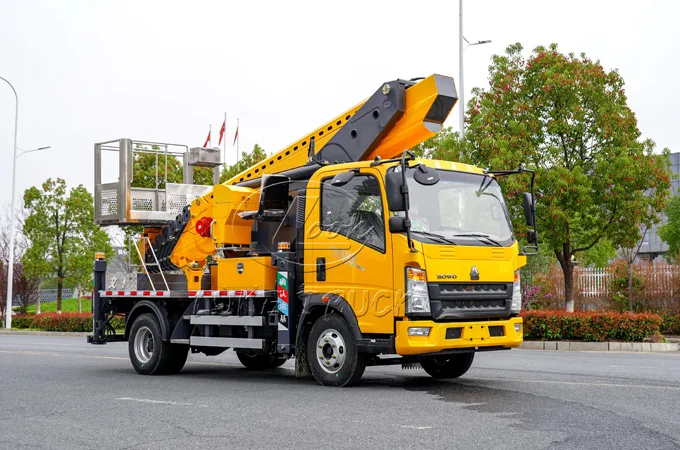
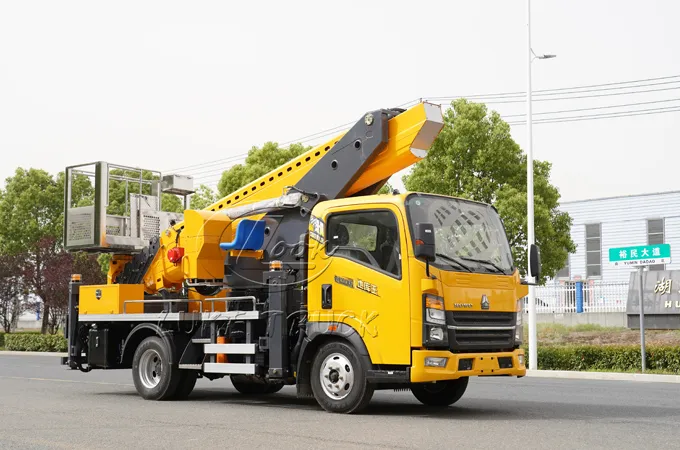
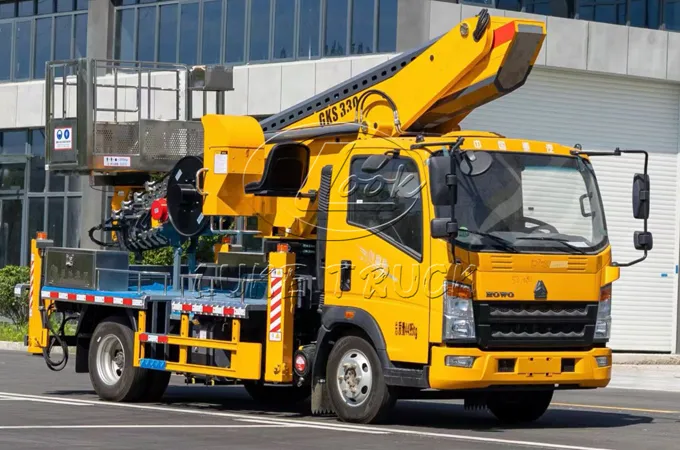
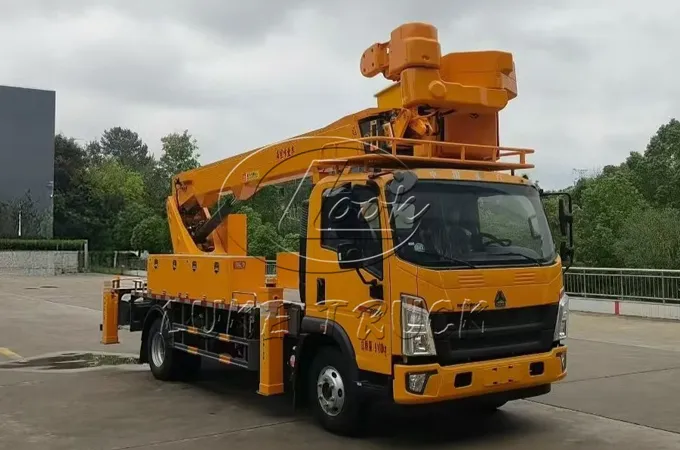
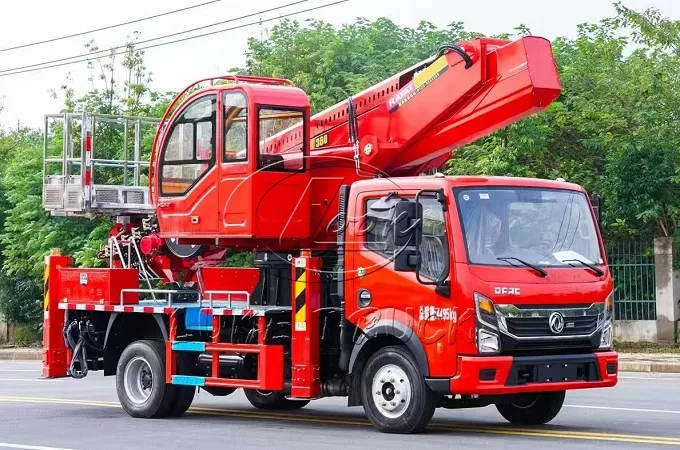
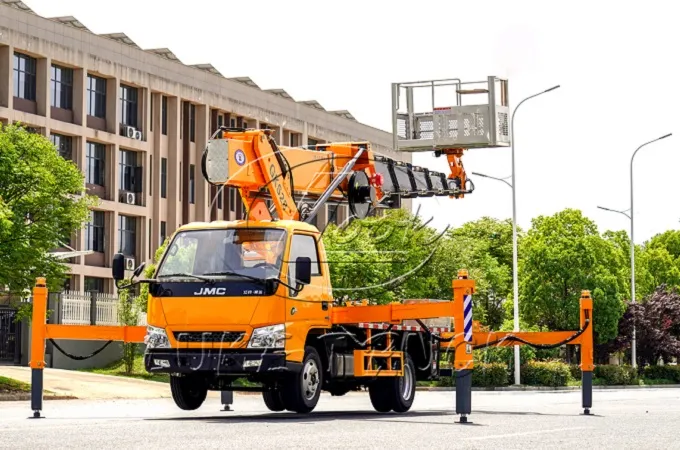
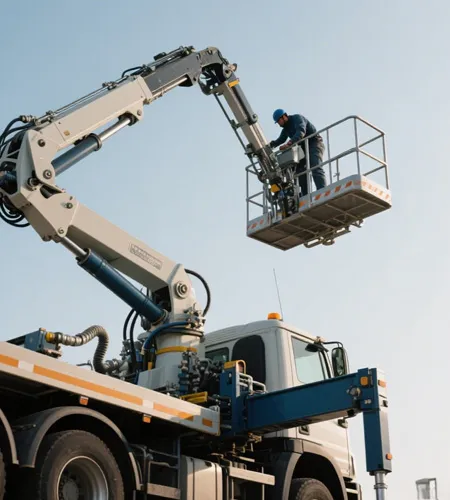

An aerial work platform (AWP), also an aerial device, aerial lift, boom lift, bucket truck, cherry picker, elevating work platform (EWP), mobile elevating work platform (MEWP), or scissor lift, is a mechanical device used to provide temporary access for people or equipment to inaccessible areas, usually at height.
It typically consists of a platform or bucket that can be elevated using hydraulic or mechanical systems, enabling workers to safely reach heights that would otherwise be difficult or dangerous.
AWPs come in various types, including scissor lifts, boom lifts, and personnel lifts, each designed to meet specific job requirements. They are widely used in construction, maintenance, painting, and other industries where working at heights is necessary.
Aerial working platform trucks function using a truck chassis for mobility. A hydraulic system drives extendable, rotating booms to lift a working platform. The platform, fitted with safety rails, carries workers and tools, controlled via panels on the platform or ground. Outriggers extend to stabilize the truck during elevation, preventing tipping. This setup allows precise positioning at heights, enabling tasks like maintenance, installation, or repair safely and efficiently.
1. Terminology
The primary difference lies in the terminology. "AWP" specifically refers to Aerial Work Platforms, a term commonly used in North America. In contrast, "EWP" (Elevating Work Platform) is a broader term used globally that includes all types of platforms and equipment designed to elevate workers to higher areas.
2. Scope of Equipment
AWP is a subset within the broader category of EWP. While AWP focuses solely on platforms designed for aerial work, such as scissor lifts and boom lifts, EWP encompasses a more extensive range of equipment. This includes not only aerial work platforms but also other lifting devices, access systems, and machinery used to provide temporary elevated access.
3. Design and Functionality
AWP: Construction AWPs are typically designed with specific tasks in mind, such as reaching high heights or navigating tight spaces. They come in various configurations, like scissor lifts that move vertically or boom lifts that offer both vertical and horizontal reach.
EWP: EWP covers a broader spectrum of equipment, including both self-propelled and towable units. These units vary widely in functionality and design, catering to a range of tasks beyond just aerial work, such as mast climbers and other specialized lifting devices.
4. Regional Variations
AWP: The term "AWP" is more commonly used in North America.
EWP: "EWP" is recognized globally. Understanding this regional variation in terminology is crucial when collaborating with international partners or sourcing information from different regions.