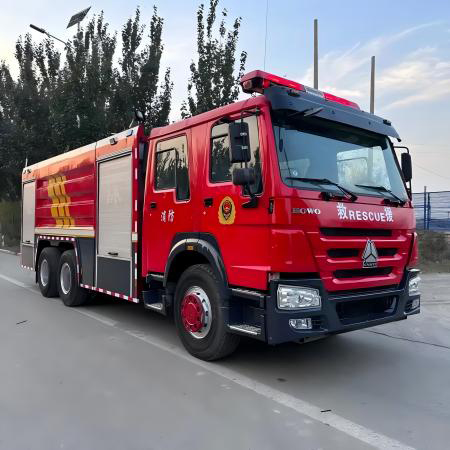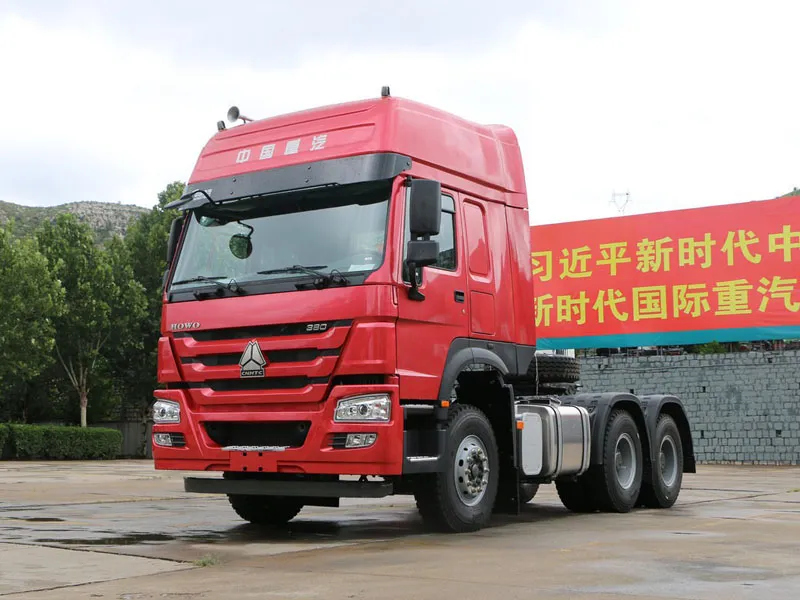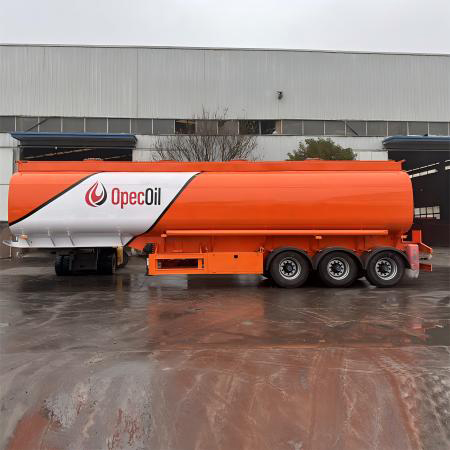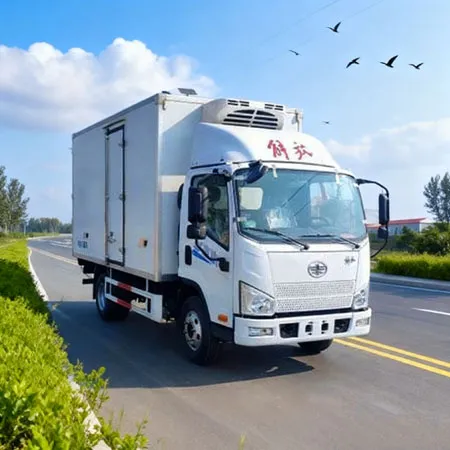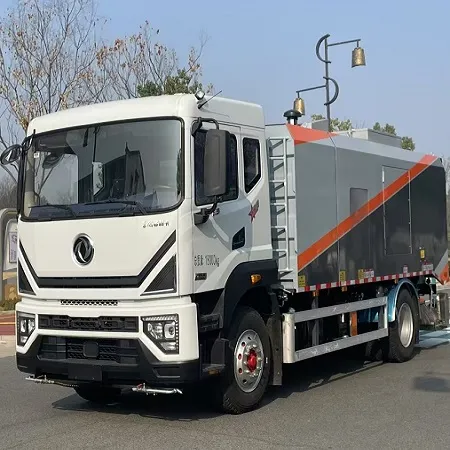
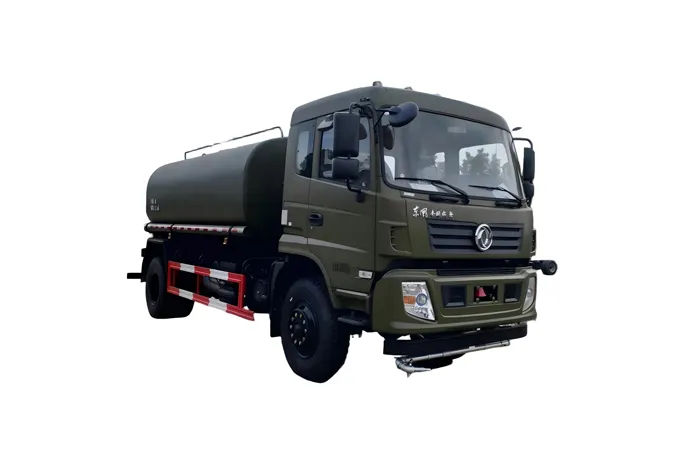
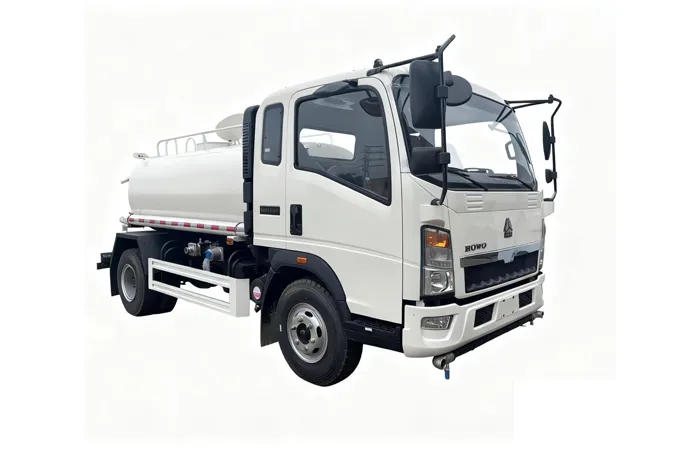
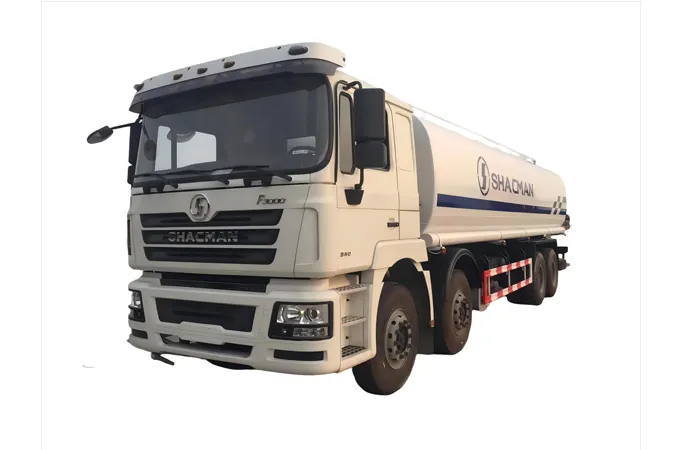
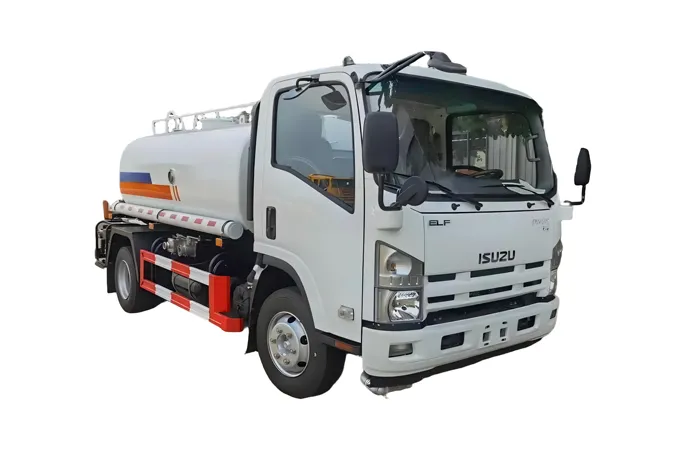
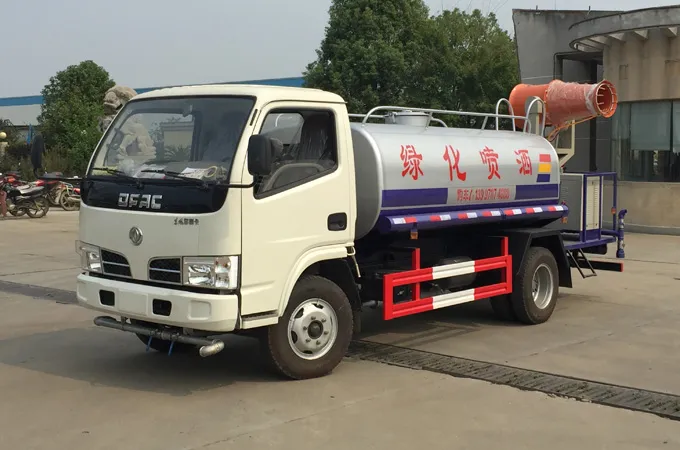
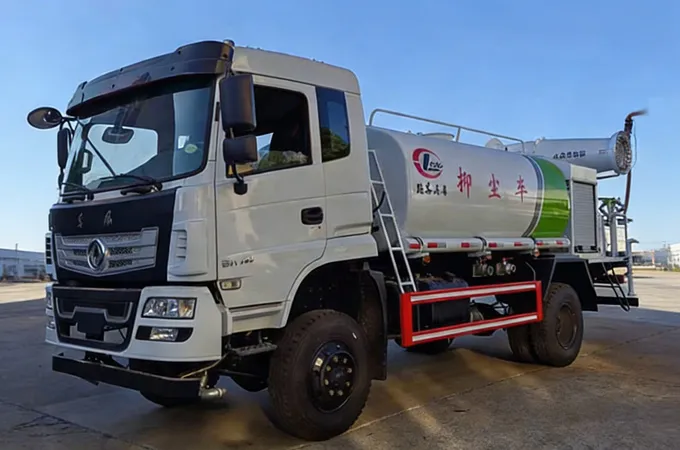
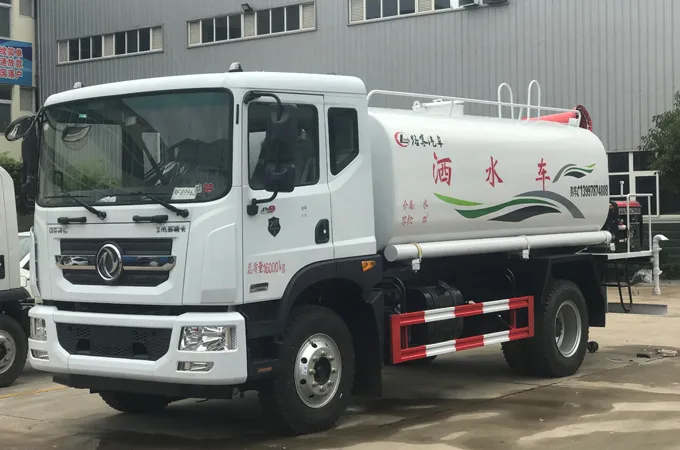
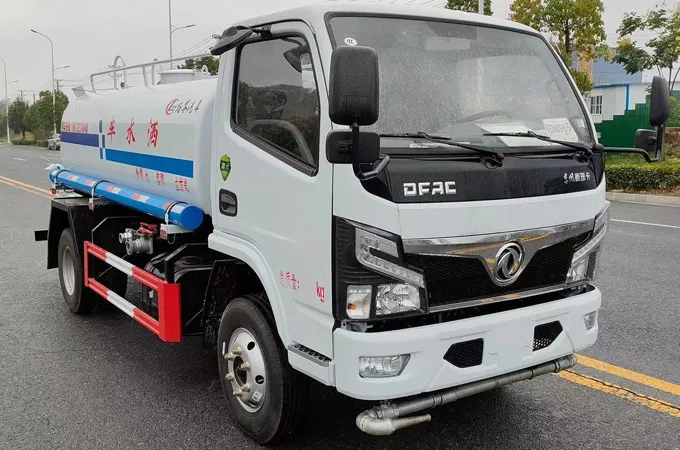
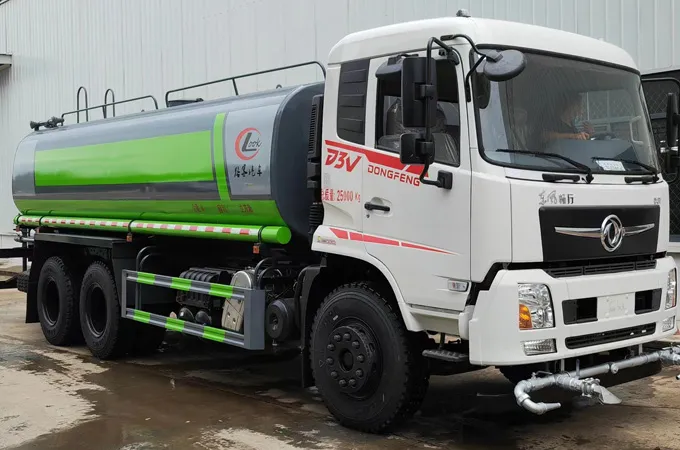
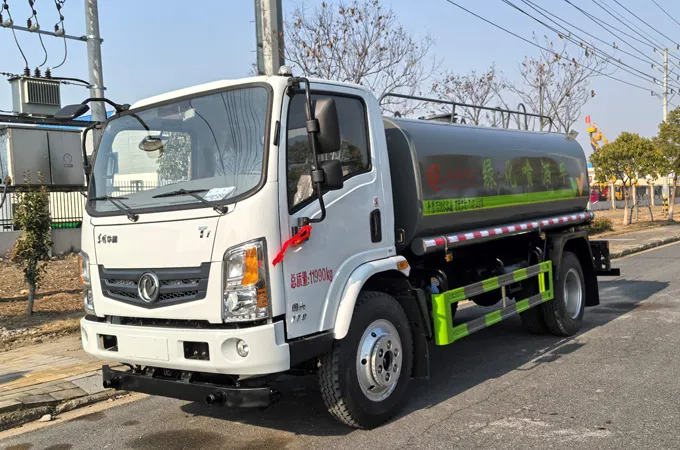
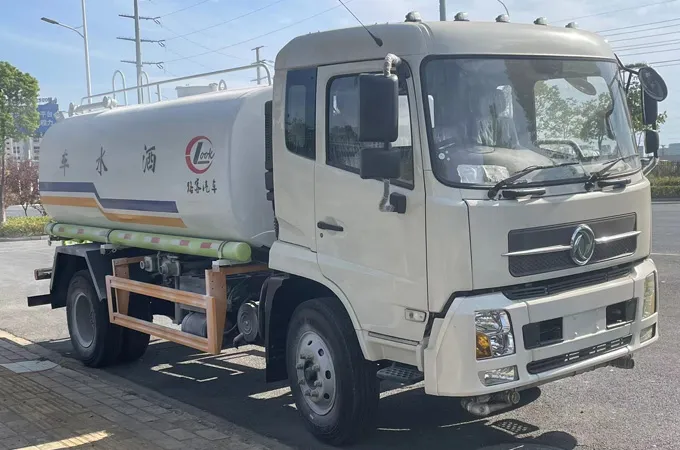
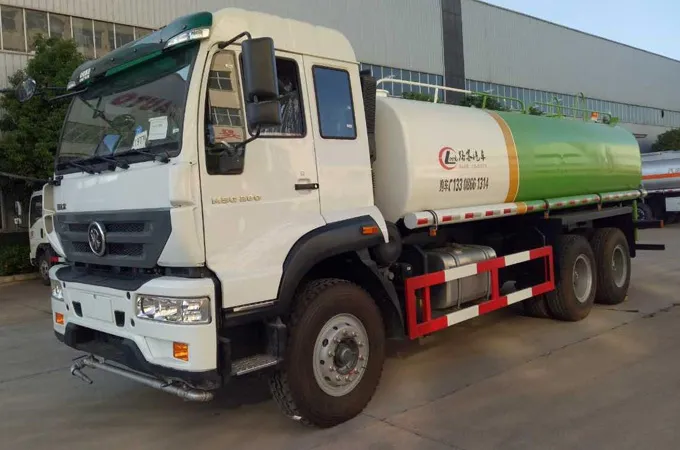
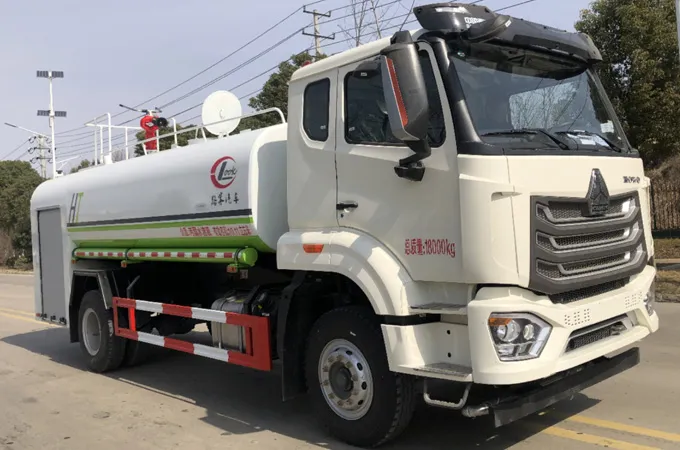
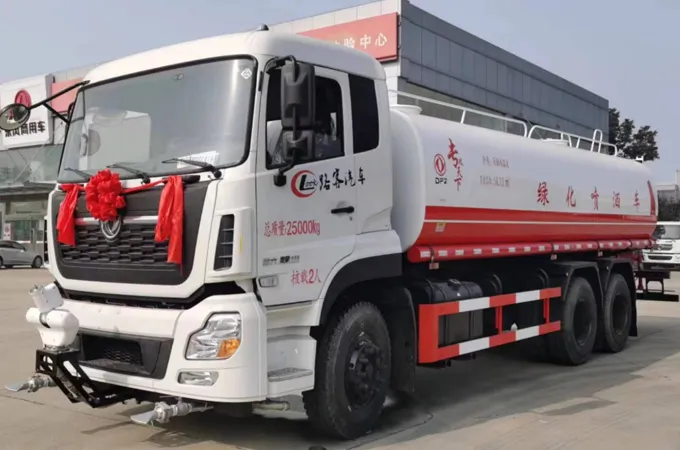
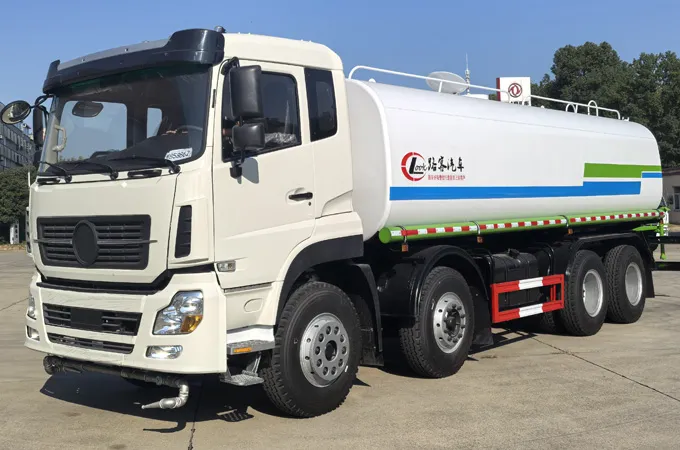
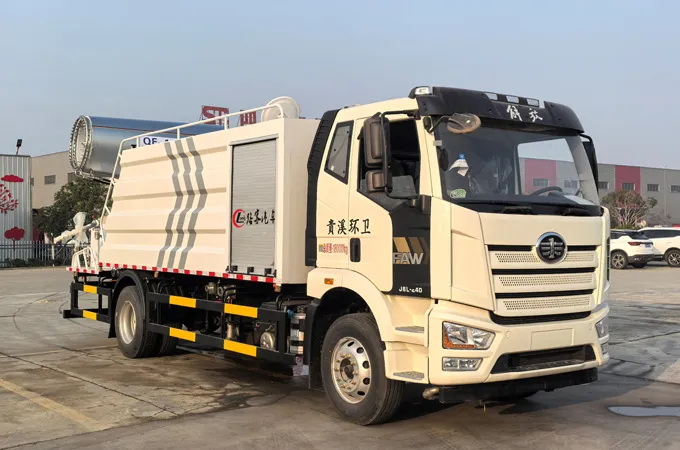
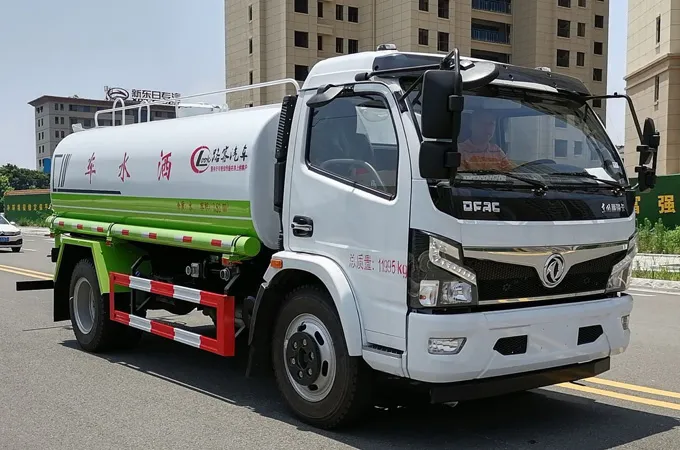
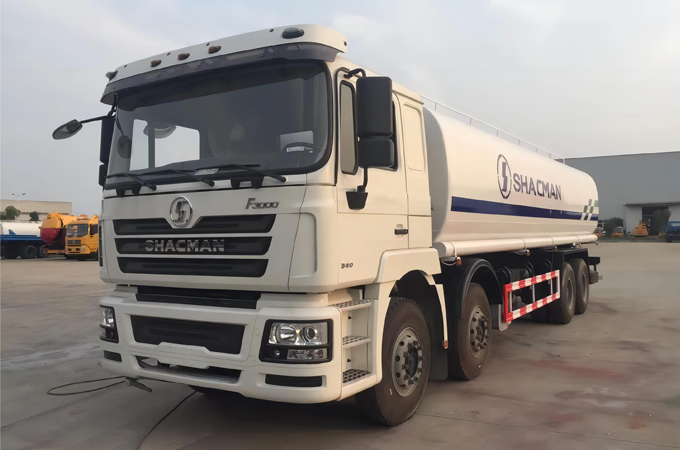

The tanks on water trucks are typically made of the following materials:
Steel: Highly durable and resistant to tough conditions, ideal for construction and mining. Available in various shapes, commonly used for potable water.
Aluminum: Lightweight with good corrosion resistance, though less durable than steel.
Polyethylene: Durable, lightweight plastic that resists rust, buckling, and cracking.
Fiberglass: Lightweight and rust-resistant, though generally less durable than other materials.
Usage Note: Steel is most common for potable water; other materials can be used if FDA standards are met.
Primary Function: Transports and distributes water using a coordinated system.
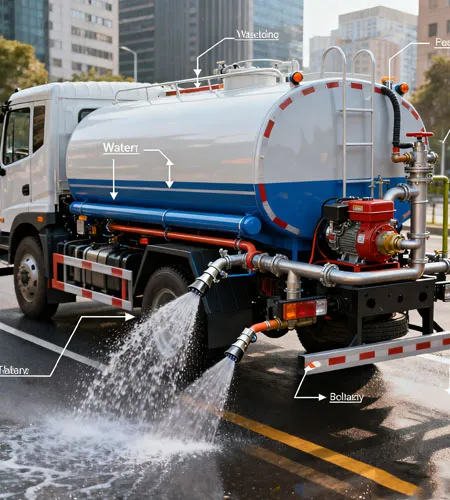
Water Storage: Large sealed tank stores water, filled via top-mounted inlets connected to water sources.
Pumping System: Engine-powered pump draws water from the tank and sends it through hoses to spray nozzles.
Spray Nozzles: Positioned on the front, sides, or rear to cover different areas.
Driver Control: Cab controls adjust water pressure and nozzle flow for tasks like road cleaning or dust suppression.
Post-Use Drainage: Remaining water is drained through bottom outlets to prepare the truck for the next cycle.