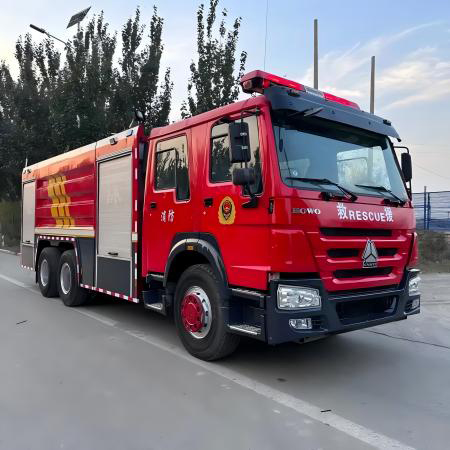
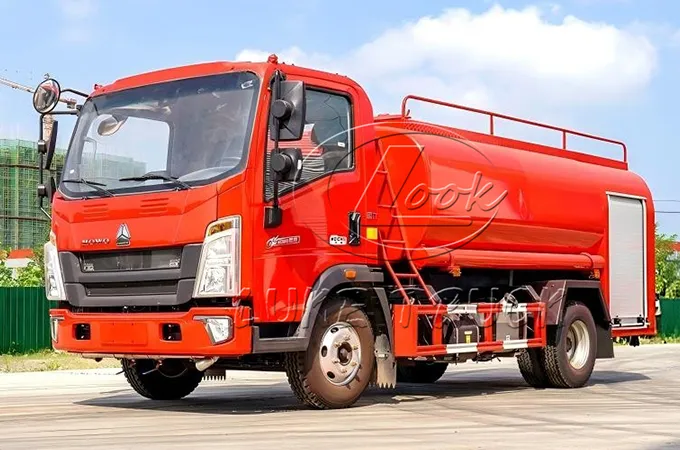
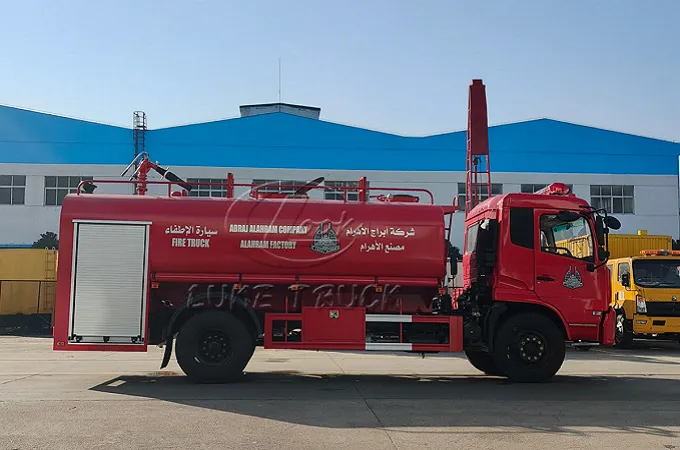
A Sinotruk fire truck is a practical choice for buyers looking for a heavy-duty firefighting vehicle with flexible chassis options, reliable carrying capacity, and configurations suitable for municipal, industrial, and emergency response applications. When selecting a Sinotruk fire truck, buyers should focus on three key factors: chassis type, firefighting capacity, and the operating environment where the vehicle will be deployed.
Sinotruk, through its special-purpose vehicle divisions, provides firefighting vehicles based on different chassis platforms and configurations, including water tank fire trucks, foam fire trucks, rescue fire trucks, and other emergency response vehicles.
For export buyers, the right choice is not simply the largest or most powerful model. The ideal Sinotruk fire truck should match local road conditions, fire risks, maintenance capabilities, and operational requirements.
Why Choose a Sinotruk Fire Truck?
Sinotruk fire trucks are widely considered by international buyers because of their heavy-duty truck platform, flexible modification capability, and suitability for different firefighting applications.
Key advantages include:
Strong chassis performance for heavy-duty operations
Multiple drive configurations
Large payload capability
Compatibility with different firefighting bodies
Adaptability for export markets
Sinotruk fire truck configurations can include different chassis layouts, such as 4×2, 6×4, and 8×4 platforms, depending on vehicle size and application requirements.
For buyers operating in demanding environments, chassis selection plays a major role in determining vehicle performance and service life.
Sinotruk Fire Truck Chassis Options
The chassis is the foundation of a fire truck. It determines payload capacity, driving performance, stability, and suitability for different applications.
4×2 Sinotruk Fire Truck Chassis
A 4×2 configuration is commonly used for:
Advantages:
Lower operating cost
Better maneuverability
Easier maintenance
Suitable for paved roads
A 4×2 Sinotruk fire truck is often selected when accessibility and daily operation efficiency are more important than maximum carrying capacity.
6×4 Sinotruk Fire Truck Chassis
The 6×4 configuration is one of the most common choices for medium and heavy firefighting applications.
Suitable for:
Municipal fire departments
Industrial facilities
Large water tank fire trucks
Foam firefighting operations
Advantages:
A 6×4 chassis provides a balance between capacity and mobility, making it suitable for many export markets.
8×4 Sinotruk Fire Truck Chassis
An 8×4 configuration is designed for high-capacity firefighting applications.
Common uses include:
Large water tank fire trucks
Industrial firefighting vehicles
Airport emergency vehicles
Advantages:
Maximum payload capability
Larger water and foam capacity
Suitable for long-duration firefighting operations
However, larger chassis models require:
How to Choose Sinotruk Fire Truck Capacity
Capacity selection depends on the firefighting mission rather than vehicle size alone.
The main capacity factors include:
Water tank volume
Foam tank capacity
Pump flow rate
Fire monitor performance
Equipment storage
Water Tank Capacity
The water tank is one of the most important specifications for fire truck buyers.
Typical configurations include:
2,000–5,000 Liter Capacity
Suitable for:
Small communities
Local fire stations
Urban response
Advantages:
Compact vehicle size
Faster deployment
Easier operation
5,000–10,000 Liter Capacity
Suitable for:
Municipal firefighting
Industrial facilities
Large commercial areas
Advantages:
10,000+ Liter Capacity
Suitable for:
Large industrial sites
Remote areas
High-risk applications
Advantages:
However, larger tanks require stronger chassis platforms and increased operating considerations.
Foam Capacity for Industrial Applications
For facilities involving:
Oil storage
Chemical production
Fuel processing
Industrial materials
a foam firefighting system may be required.
A Sinotruk fire truck with foam tank configuration can provide additional capability for liquid fuel and industrial fire scenarios.
Foam capacity should be selected based on:
Fire risk level
Storage conditions
Industry requirements
Pump and Fire Monitor Selection
The firefighting system determines how effectively the truck delivers water or foam.
Important specifications include:
Pump Flow Rate
Higher flow rates are suitable for:
Large fires
Industrial facilities
Extended operations
Pump Pressure
Pressure affects:
Fire Monitor
A fire monitor provides long-distance water or foam projection.
It is commonly used for:
Industrial fires
Tank fires
Large-area firefighting
Sinotruk Fire Truck Applications
Different buyers require different configurations.
Municipal Fire Departments
Recommended configuration:
Applications:
Urban fires
Residential emergencies
Public facilities
Priority:
Fast response and operational flexibility.
Industrial Facilities
Recommended configuration:
6×4 or 8×4 chassis
Large water tank
Foam system option
High-capacity pump
Applications:
Factories
Chemical plants
Storage facilities
Priority:
Fire suppression capability and continuous operation.
Mining and Remote Areas
Recommended configuration:
Heavy-duty chassis
Larger tank capacity
Durable structure
Applications:
Priority:
Reliability in challenging environments.
Airport Emergency Response
Airport firefighting requires specialized configurations.
Recommended features:
These vehicles require higher payload capacity and specialized firefighting systems.
Conclusion
A Sinotruk fire truck offers flexible solutions for buyers requiring reliable chassis performance, different capacity options, and customized firefighting configurations. The correct model depends on application, road conditions, required water capacity, and operational goals.
For export buyers, selecting the right chassis and firefighting system is more important than simply choosing the largest vehicle. A properly configured Sinotruk fire truck can provide efficient emergency response for municipalities, factories, industrial sites, and specialized applications.
Frequently Asked Questions
1. What is a Sinotruk fire truck used for?
A Sinotruk fire truck is used for municipal firefighting, industrial fire protection, rescue operations, and emergency response applications.
2. What chassis options are available for Sinotruk fire trucks?
Common chassis options include 4×2, 6×4, and 8×4 configurations depending on capacity and application requirements.
3. How much water can a Sinotruk fire truck carry?
Capacity varies by model. Configurations can range from several thousand liters for standard firefighting vehicles to much larger capacities for industrial applications.
4. Is Sinotruk suitable for export markets?
Yes. Sinotruk produces heavy-duty vehicles and special-purpose vehicle platforms used in international markets.