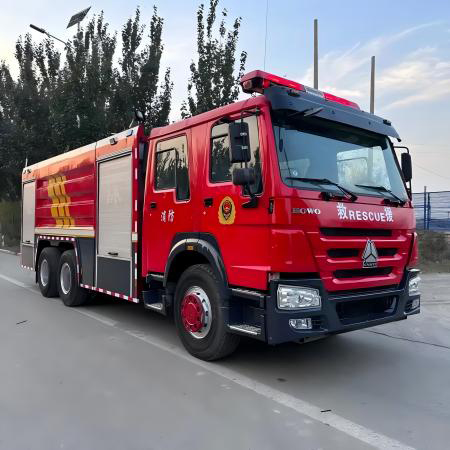
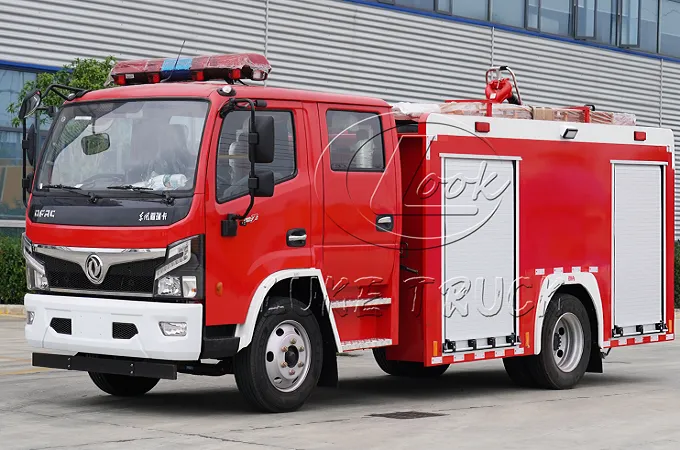
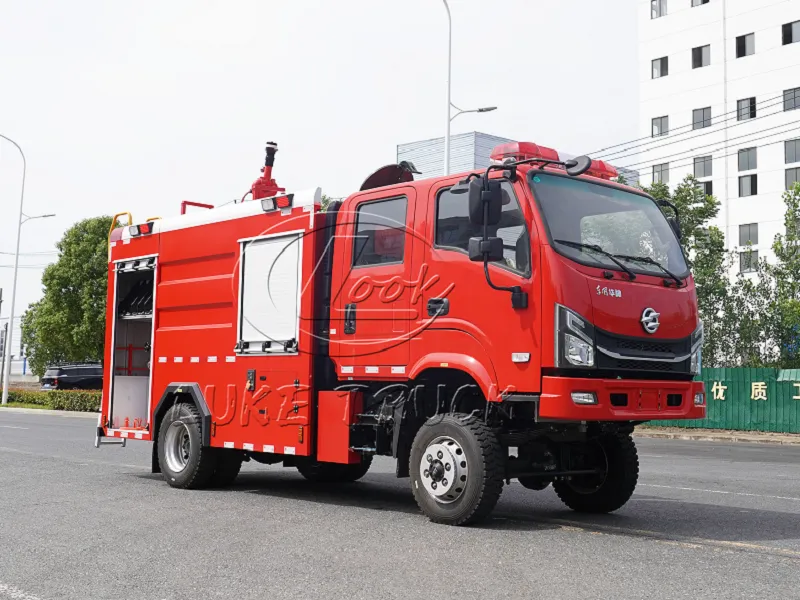
A fire truck typically weighs between 10,000 kg and more than 40,000 kg (22,000–88,000 lbs), depending on its size, chassis type, water capacity, firefighting equipment, and application. Light-duty fire trucks may weigh around 10–15 tons, while heavy-duty water tankers, foam fire trucks, and rescue vehicles can exceed 30 tons when fully equipped.
For buyers, fire truck weight is not just a specification—it directly affects payload capacity, road requirements, fuel consumption, maneuverability, and long-term operating costs. Choosing the right weight configuration requires balancing firefighting capability with the environment where the vehicle will operate.
Why Does Fire Truck Weight Matter?
Many buyers focus on water tank capacity, pump performance, or equipment configuration, but vehicle weight is equally important.
The total weight of a fire truck determines:
Whether roads and bridges can support the vehicle
How easily the truck can access emergency locations
Fuel consumption and maintenance costs
Chassis durability
Maximum equipment capacity
A heavier fire truck may carry more water and equipment, but it may also require wider roads, stronger infrastructure, and higher operating costs.
The right choice depends on the firefighting mission rather than simply selecting the largest vehicle available.
Understanding Fire Truck Weight Terms
Before comparing different vehicles, buyers should understand several important weight concepts.
Curb Weight (Empty Vehicle Weight)
Curb weight refers to the weight of the fire truck without operational loads.
It usually includes:
Chassis
Cab
Body structure
Pump system
Fixed equipment
It does not include:
Full water tank
Foam concentrate
Crew members
Additional tools
Gross Vehicle Weight Rating (GVWR)
GVWR is the maximum safe operating weight recommended by the chassis manufacturer.
It includes:
Vehicle weight
Water
Foam
Equipment
Firefighters
Additional payload
Exceeding GVWR can affect:
Braking performance
Suspension life
Tire safety
Vehicle stability
Operational Weight
Operational weight represents the real working condition of the vehicle.
A fully prepared fire truck may include:
Full water tank
Full foam tank
Rescue equipment
Hoses
Tools
Crew
This is usually the most important weight for buyers to consider.
Average Weight of Different Types of Fire Trucks
Different firefighting missions require different vehicle sizes.
| Fire Truck Type | Typical Weight Range |
|---|
| Small Fire Truck | 10–15 tons |
| Municipal Fire Truck | 15–25 tons |
| Water Tank Fire Truck | 20–35 tons |
| Foam Fire Truck | 20–40+ tons |
| Rescue Fire Truck | 15–30 tons |
| Airport Fire Truck | 30–50+ tons |
Key Factors That Affect Fire Truck Weight
1. Chassis Type
The chassis is one of the biggest factors influencing total vehicle weight.
Common chassis configurations include:
Light-Duty Chassis
Used for:
Advantages:
Lower weight
Better maneuverability
Lower operating cost
Typical applications include rural communities and small industrial facilities.
Medium-Duty Chassis
Used for:
Municipal firefighting
Rescue vehicles
Industrial response
Advantages:
Heavy-Duty Chassis
Used for:
Advantages:
2. Water Tank Capacity
The water tank is often the largest contributor to fire truck weight.
Water weighs approximately: 1 liter = 1 kilogram
This means:
2,000 L water = about 2 tons
5,000 L water = about 5 tons
10,000 L water = about 10 tons
A buyer choosing a larger water tank must also consider:
Chassis capacity
Brake system
Suspension strength
Road conditions
A larger tank is not always the best choice if it reduces vehicle accessibility.
3. Firefighting Equipment
Equipment configuration can significantly increase vehicle weight.
Additional weight may come from:
Fire pumps
Foam systems
Hydraulic rescue tools
Generators
Ladders
Cranes
Communication equipment
Protective equipment
For example, a rescue fire truck carrying extensive hydraulic tools and lifting equipment may weigh significantly more than a basic firefighting vehicle of similar size.
4. Body Structure and Materials
The material used for the vehicle body also affects weight.
Common materials include:
Carbon Steel
Advantages:
Strong structure
Lower manufacturing cost
Disadvantage:
Stainless Steel
Advantages:
Corrosion resistance
Long service life
Disadvantage:
Aluminum Alloy
Advantages:
Disadvantage:
Fire Truck Weight by Application
Different buyers need different weight configurations.
Municipal Fire Departments
Typical requirements:
Medium-size vehicles
Balanced water capacity
Good urban mobility
A lighter configuration may be preferred for:
City streets
Residential areas
Frequent daily response
Industrial Facilities
Industrial buyers often require heavier vehicles because they need:
Larger water tanks
Foam systems
Additional equipment
For example, a foam fire truck designed for oil, gas, and chemical facilities may require a heavy-duty chassis due to the additional foam and firefighting systems.
Rural and Off-Road Applications
Rural buyers usually prioritize:
Mobility
Ground clearance
Road adaptability
A lighter small fire truck or 4×4 configuration may perform better than a larger vehicle in restricted environments.
Airport Firefighting
Airport operations require some of the heaviest firefighting vehicles because they need:
These vehicles often use heavy-duty chassis platforms.
How Weight Affects Fire Truck Selection
Before purchasing, buyers should evaluate how vehicle weight matches their operating environment.
Road Conditions
Consider:
Road width
Bridge limitations
Terrain
Surface conditions
A heavy vehicle may not be suitable for rural roads or older infrastructure.
Required Firefighting Capacity
Determine:
Operating Costs
Heavier fire trucks generally require:
A correctly sized vehicle often provides better long-term value.
Conclusion
The weight of a fire truck depends on many factors, including chassis type, water tank capacity, firefighting equipment, and intended application. While larger vehicles provide greater firefighting capacity, they are not always the best solution for every environment.
For buyers, the goal should be selecting a fire truck with the right balance between payload, mobility, and operational requirements. A properly configured vehicle will deliver better performance, lower operating costs, and greater reliability throughout its service life.
Frequently Asked Questions
1. How much does a fire truck weigh?
Most fire trucks weigh between 10,000 kg and 40,000+ kg depending on their size, chassis, water capacity, and equipment configuration.
2. How much does a fully loaded fire truck weigh?
A fully loaded fire truck can weigh significantly more than its empty weight because of water, foam, tools, equipment, and crew. Heavy-duty models may exceed 40 tons.
3. How much does water add to a fire truck's weight?
Water adds approximately 1 kilogram per liter. A 5,000-liter tank adds about 5 tons to the vehicle weight.
4. What is the heaviest type of fire truck?
Airport fire trucks and large foam fire trucks are usually among the heaviest because they require large water and foam capacities.
5. Does a heavier fire truck mean better firefighting performance?
Not necessarily. A heavier vehicle may carry more equipment, but the best fire truck is the one that matches the operating environment and mission requirements.