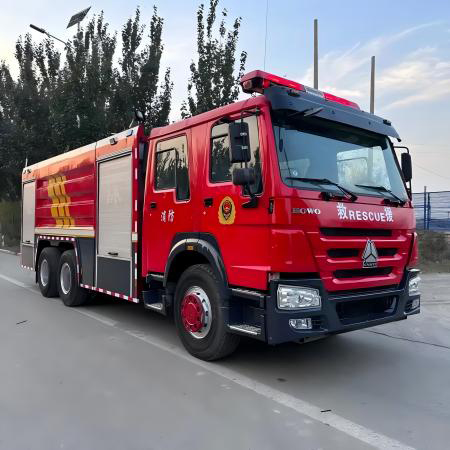
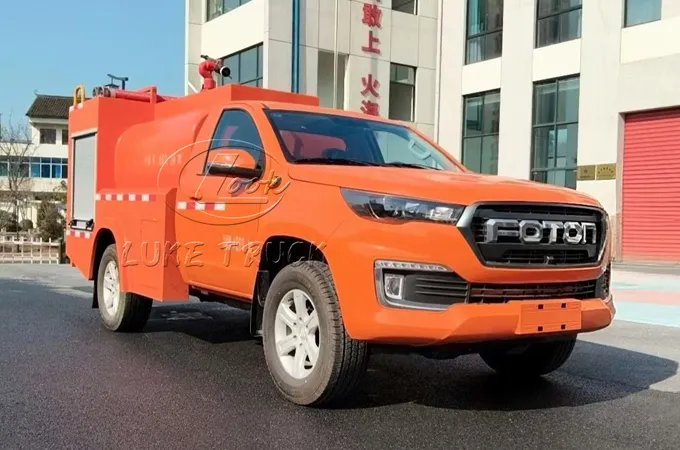
The main difference between a fire truck and a fire engine is their primary function. A fire engine is mainly designed to transport water and firefighting equipment for fire suppression, while a fire truck typically carries specialized equipment such as ladders, rescue tools, and aerial platforms for rescue operations and support.
Introduction
Many people use the terms fire truck and fire engine interchangeably, but they are not always the same type of emergency vehicle.
The difference mainly comes from their primary purpose. A fire engine is traditionally designed for firefighting operations, carrying water tanks, pumps, and hoses to suppress fires. A fire truck, on the other hand, is typically equipped with specialized rescue equipment, aerial ladders, and tools used to support firefighting and emergency response.
For fire departments, municipalities, industrial facilities, and international buyers looking for rescue fire truck for sale, understanding this difference is important when selecting the right vehicle configuration.
Although modern firefighting vehicles often combine multiple functions, knowing the traditional differences between fire trucks and fire engines helps buyers make better purchasing decisions and choose equipment that matches their emergency response needs.
Why Are Fire Truck and Fire Engine Often Confused?
The confusion between these two terms exists because different countries and regions use them differently.
In some markets:
"Fire truck" refers to almost any firefighting vehicle.
"Fire engine" is commonly used for vehicles equipped with pumps and water tanks.
Some departments use both terms to describe the same vehicle.
However, in professional firefighting operations, there are differences in equipment, design, and purpose.
Understanding these distinctions is especially useful for buyers ordering customized emergency vehicles because manufacturers need to know the exact operational requirements.
What Is a Fire Engine?
A fire engine is primarily designed for fire suppression.
Its main purpose is to transport firefighters, water, and firefighting equipment directly to the fire scene.
The most important feature of a fire engine is its pumping system.
Main Equipment on a Fire Engine
Typical fire engines include:
The onboard pump allows firefighters to deliver water quickly before connecting to an external water source.
Main Applications
Fire engines are commonly used for:
For many municipal fire departments, the fire engine is the primary response vehicle because it provides immediate firefighting capability.
What Is a Fire Truck?
A fire truck generally refers to a vehicle designed to support firefighting operations through specialized equipment.
Unlike a fire engine, its primary focus is not always water delivery.
Fire trucks often provide:
Common Fire Truck Types
Fire trucks may include:
Aerial Ladder Trucks
Used for:
Rescue Fire Trucks
Used for:
Traffic accidents
Technical rescue
Disaster response
Equipment may include:
Hydraulic rescue tools
Generators
Cutting equipment
Medical supplies
Platform Fire Trucks
Used for:
High-rise operations
Industrial facilities
Large structures
They provide elevated working platforms for firefighters.
Fire Truck vs Fire Engine: Key Differences
| Comparison | Fire Engine | Fire Truck |
|---|
| Primary Function | Fire suppression | Rescue and specialized support |
| Main Equipment | Water tank, pump, hoses | Ladders, rescue tools, platforms |
| Water Capacity | Usually larger | May have limited water |
| Main Role | Attack the fire | Support rescue operations |
| Typical Use | Initial firefighting response | Specialized emergency response |
| Common Users | Municipal fire departments | Fire departments, rescue teams |
Which One Should Buyers Choose?
The correct choice depends on the organization's operational needs.
Choose a Fire Engine If You Need:
General firefighting capability
Water supply during emergencies
Fast fire suppression response
Municipal firefighting operations
A fire engine is usually the foundation of a firefighting fleet.
Choose a Fire Truck If You Need:
Organizations dealing with complex emergencies may require specialized fire trucks.
Conclusion
The difference between a fire truck and a fire engine mainly comes down to their primary function. Fire engines focus on water delivery and fire suppression, while fire trucks typically provide specialized rescue equipment, aerial access, and emergency support capabilities.
For buyers selecting firefighting vehicles, the most important factor is not the terminology but the operational purpose. Understanding the required firefighting tasks, equipment configuration, and working environment will help ensure the selected vehicle provides reliable performance when it matters most.
Frequently Asked Questions
1. Is a fire truck the same as a fire engine?
Not exactly. A fire engine is mainly designed for fire suppression with water tanks and pumps, while a fire truck usually focuses on specialized rescue equipment and support functions.
2. Which is better, a fire truck or a fire engine?
Neither is universally better. A fire engine is better for general firefighting, while a fire truck is better for rescue operations and specialized emergency response.
3. Do fire trucks carry water?
Some fire trucks carry water, but their primary purpose is usually rescue, aerial operations, or specialized support rather than water-based firefighting.
4. Why do some countries call all firefighting vehicles fire trucks?
Terminology varies by region. In some countries, "fire truck" is used as a general term for all emergency firefighting vehicles.
5. What vehicle do firefighters use first at a fire?
In many cases, the fire engine is the first vehicle deployed because it carries water, pumps, and hoses needed for immediate fire suppression.
6. Can a fire truck replace a fire engine?
A specialized fire truck may not fully replace a fire engine because it may lack sufficient water capacity or pumping capability.